

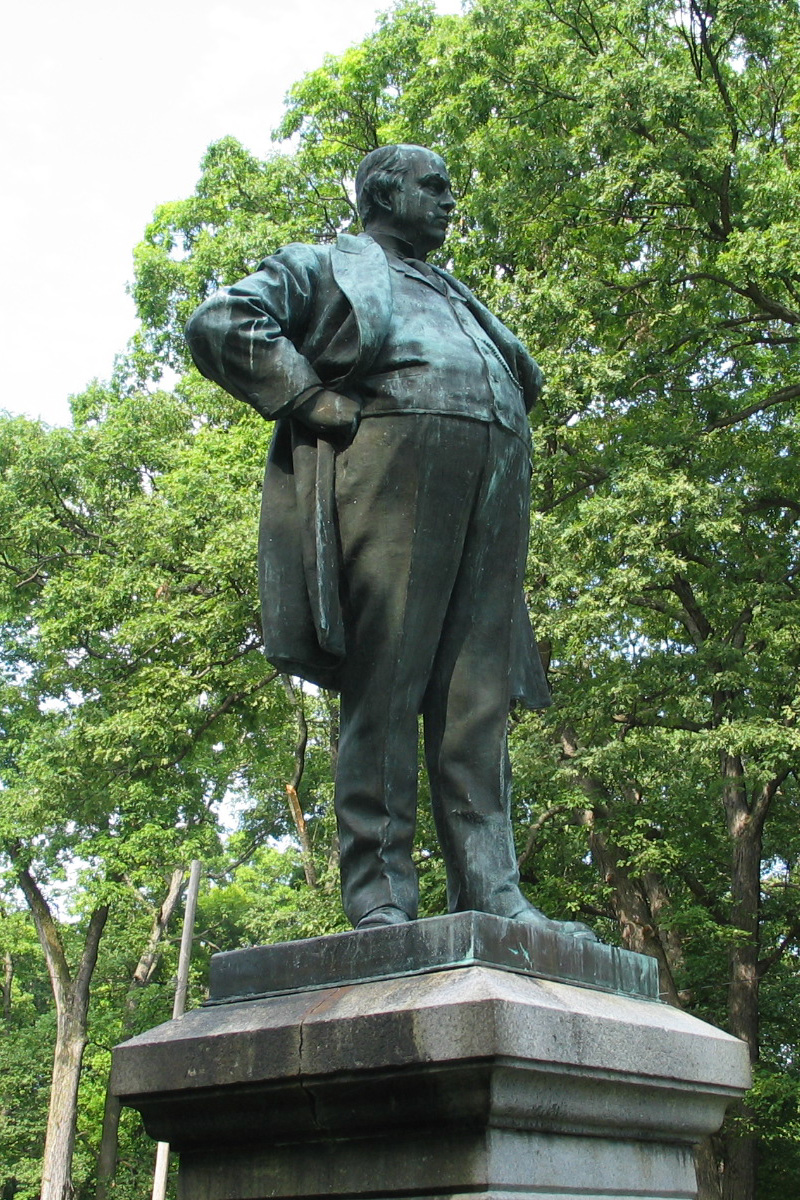
The agnostic does not simply say, “l do not know.” He goes another step, and he says, with great emphasis, that you do not know. He insists that you are trading on the ignorance of others, and on the fear of others. He is not satisfied with saying that you do not know, — he demonstrates that you do not know, and he drives you from the field of fact — he drives you from the realm of reason — he drives you from the light, into the darkness of conjecture — into the world of dreams and shadows, and he compels you to say, at last, that your faith has no foundation in fact.
— Robert Green Ingersoll

I think that agnosticism and atheism are two different things that may be put together or separately.
Agnosticism is a stance where you don’t claim whether a God exists or not as a solid truth or fact.
Atheism is a stance where you believe that there is no God.
Basically, we could say someone is an agnostic atheist. This means that this person acknowledges the lack of evidence whether there is a God or not, but his or her opinion is that there isn’t a God. Though, this may quite go against the fact that disbelief does not hold the burden of proof.
IMO, the difference between atheism and agnosticism is the weight they give on the God proposition. that the God hypothesis in answering all unknowns before (thus god of gaps) is a valid point and enough to be considered as an hypothesis.
one considers it. with balls as to say we’re all unsure and unable to disprove.
the other completely invalidates its supposition as an answer, and have the guts to say “why bother disproving an uncertain point in the first place.” like fairies and mermaids, disproving such entities lies in considering them as possible in the first place.
i see a lot of comments here that mention agnosticism as a “transition phase” into atheism. i don’t think so. those who say “i was an agnostic before i became an atheist” were actually never agnostics. the main mantra of agnostics is simple — NOBODY KNOWS, AND NOBODY CAN KNOW. even atheists cannot PROVE that there is no god, which is exactly what agnostics are saying. for them, there is no way to know because reason is not enough to rationally explain theism. atheism itself is irrational, because you are merely replacing something unprovable with another thing unprovable. that is their stand. if you are an agnostic, you actually find atheism just as irrational as religious fanaticism. and the beauty of it is, there is actually a mathematical proof that the concept “god does not exist” is unprovable. so please, don’t say agnosticism is just a transition phase. an agnostic is separate from theists and atheists. they are not middle ground because they actually have a stand, and they are strong in that stand as well. they are not the “fence” dividing two yards. agnostics are a separate yard, a third house, if you will. therefore, if you are an atheist now, then you were never a real agnostic.
Interesting point. It's also true to an extent. Agnostics do say that "you do not know" but they will also be the first to say "neither do I." The point is that nobody really knows, and anything is possible. And yes, it may seem "wishy-washy" or may even be construed as having "no balls" by refusing to pick a side. I guess Agnostics are the type of people that saves and reloads frequently on RPG games.
Mostly, I think Agnosticism is the inevitable phase of a loss of faith. It does not mean they are Atheists nor do they eventually have to be one. The problem with staying in this phase is that both parties (Theists / Non-Theists) will at one point resent the Agnostics for not picking a side. For how can you beat someone on a debate when all he says is "You could be right, or maybe you could be wrong…"
Maybe, they're non-theists that just can't get around the idea of there not being an afterlife. Or the idea that there is no god in any form — may it be a benevolent god, a fallible god or maybe even a non-sentient god (god forbid).
Or maybe, Agnostics are who they are because they just don't like Religious fanatics and Militant Athiests equally.
For me, Iam agnostic or atheist, I do not believed in organized religion.
ibig bang sabihin kung ikaw ay naniniwala sa isang Diyos, ito ay walang basehan at pawang isang iluyon o opinyon lamang?
[…] Who says agnostics are atheists without balls? […]
I see agnosticism as a transition towards atheism – at least based on my experience. I used to be agnostic but only very briefly. You believe in a god or you don't.
My idea of that transition is a sort of "coming out" and finally being completely certain of your stand (after searching for evidence or the lack of it and then accepting it). If that phase is taking forever, then IMO there must be a lack of balls there. Procrastination perhaps. Or self-consciousness/fear of rejection. Plain as that.
my question about agnosticism is: What is the standard of certainty are they looking for?
in a sense, we are never sure of anything. does that mean we dont believe in anything?
faith isnt about absolute certainty. this is a key idea that alot of people, including mr inglesoll doesnt quite give people of faith credit for.
this is an inherently subjective and difficult question. my sense is that different fields have different standards of certainty.
I really view Agnosticism as a transition state to Atheism.
I mean people who are more comfortable sitting above the fence and not really choose a side. I'm talking about the existence of a god or gods here.
For me there are only 2 sides. There is a god & there's no god. Choosing in between or the "I don't know" statement is a logical fallacy to me.
Of course an Atheist didn't just got to an absolute conclusion that there is no god. We looked at evidences, facts and probabilities. After analyzing all of it. Then he/she can draw a conclusion from it. But an atheist is also open & a freethinker, if showed the evidences that he/she is wrong then he/she accepts it.
"Choosing in between or the “I don’t know” statement is a logical fallacy to me."
Creating a false dichotomy is also a logical fallacy 😛
So you mean the arguments are: there is no god and there is a god, and there is "well I don't know" and there is "I'm kinda in between"
I really don't understand the point with the other 2 arguments.
@Michael: If I asked you whether if I was wearing an orange shirt right now, what would you say? Yes? No?
Sometimes, "I don't know" is the logical response.
@Frank
True. But it's not a stance.
I could look at the evidences if you are indeed wearing an orange shirt right now. And there are none presented. Then, I would conclude that you are not wearing an orange shirt right now.
I wouldn't say it is an absolute conclusion. Of course I could be wrong. Until you personally came to me and show that you are wearing an orange shirt. Then I would believe.
But this analogy you presented is not in parallel with the belief of a god. Would a believer asks you that, "Do you think I believe in a god?". Of course not. The only argument they got is, "There is a god". After you analyzed the evidences, the arguments & probabilities. It's either you believe them or not. Just answering "I don't know" seems useless.
@Michael:
Do you believe in string theory?
For me, agnosticism isn't really about an inability to choose a side. For me, it's a decision not to jump to conclusions about something I know so little about. I am, after all, just a tiny, insignificant creature in an impossibly vast universe. Who am I to say that my logic is capable of figuring out everything about the universe?
"I don't know" is neither a logical fallacy nor is it useless. It is simply an honest and humble answer, an admittance that, as human beings, we do not know and are incapable of knowing everything, and no matter how good our logic is, our reasoning is, ultimately, not infallible. Recognizing one's own weaknesses and limitations is a necessary step to nurturing curiosity in oneself. Curiosity leads us to ask questions, make investigations, examine evidence, etc. – all the things that engender open-mindedness and critical thinking. And without these things, we will not learn.
True, there is no logical or physical evidence of God's existence. But we are only human beings after all, and the current level of our technology is too primitive to enable us to fully investigate and scrutinize the exact nature of the universe, or if there are multiple universes, or if there is anything beyond our known universe.
Am I saying there's a God? No. I'm saying it just might be possible. The overwhelming lack of evidence makes that possibility even slimmer. But lack of evidence does not mean there is no evidence. It might mean we just haven't found it yet.
Several thousand years from now, we might have the technology to finally prove whether he exists or not. Right now, however, aside from trying to convince intolerant, unthinking, biased and arrogant religious (and some non-religious) people that what they are doing is unhealthy and wrong, I do not see the point of arguing about God. It is much better to focus our efforts on becoming better human beings than to pick sides about an issue that clearly cannot be 100% resolved given our present logical and technological limitations.
b-b-b-b-but i'm an agnostic atheist! D:
it's just a derogatory expression to mean agnostics don't have a firm stance, a real side (which is the connotation of "having balls" here). it's true, agnostics don't have a firm stance, though it doesn't have to be a negative thing. it's an insulting expression, yeah, but i don't get insulted easily. its already a given that not everyone has to agree or like agnosticism. or maybe i'm not insulted because i AM literally an agnostic without balls 😛
Hmmm…this post seems contradictory to me.
"He (the agnostic) insists that you are trading on the ignorance of others, and on the fear of others." By 'you' does he mean the theist? If yes, then check out this phrase: "he (the agnostic) drives you from the realm of reason".
Anybody care to enlighten me? Honestly, I don't understand if the agnostic is being portrayed here as a rational or irrational guy.
What Ingersoll means by this is you remove any pretension from the theist that he is being rational (in the realm of reason) and puts him in his fantastical place (the realm of faith) 🙂
Thanks! 🙂 So here the agnostic is being portrayed as a rational guy, right? 🙂
Agnostics are the socially acceptable atheists. Admittedly this is why I am more reluctant to call myself an atheist. In conclusion, some agnostics may be the brave type of which he speaks but some are just in limbo between organized religion and atheism w/ no strong conviction (balls?) to go either way.
militant agnostic perhaps? 🙂
Here here!